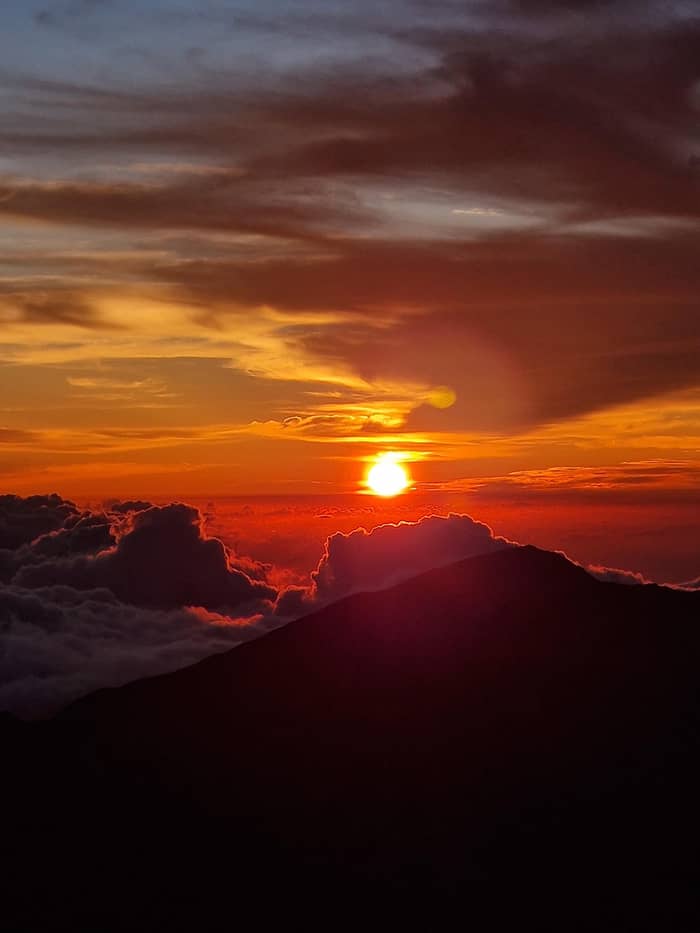
Hike
The guided hike
On foot with a guide
- Length7 hours
- WalkingTwo hikes of about 2 miles
- Pricefrom $208
Hands-on checklist
Haleakala sunrise tour from Maui
★ 4.7 · 633 user reviews
The short version
A Haleakala sunrise hike usually means a short walk near the rim, since the long crater trails are day hikes and walking the summit road is not recommended.
Hiking in brief
List of 9 items
Tick off each point as you complete it. This device keeps your progress.
0 / 9 ready
Everything is ready. Only your date and your hotel on Maui are left to choose.
Secure your spotA sunrise at the rim and a hike are different plans on this mountain. Here are the short walks, the crater trails, the guided option and the rules that decide your morning.
Editorial team, haleakalasunrise.top · Updated November 24, 2026 · 9 mins to read
Facts at a glance
The first thing to understand is that a sunrise at the rim and a hike are separate plans. The sunrise belongs to the summit road, which needs a booking for vehicles during the slot that opens at 3:00 AM and ends at 7:00 AM,1 and the park says that people can walk or bike up without one, but it does not recommend walking the 10 mile summit road in the dark and crowded early hours.2 That leaves the trails as something you add around the sunrise, either before it on a short walk or after it on a longer one.
The summit area is generous with trails, from a stroll beside the visitor center to a full-day crossing. The park counts over 30 miles of hiking trails in the Summit District, ranging from just 10 minutes to multi-day overnight trips,8 and groups are limited to 12 people with hikers required by law to stay on marked trails.9 No food, supplies or gas are available in the park, so the pack you start with is the pack you have.10
The honest picture, then, is a menu rather than a single trail. You can watch the sunrise from a viewpoint and walk a short loop in the warming light. You can start a crater trail at the visitor center lot once the road is open to everyone. You can join a guided hike that runs through the day. Each of these is a real activity with real distances in the park's own listing, and the sections below set them out so you can pick one that fits your legs and your lungs.
Hikes by effort
| Hike | Distance and height change | What the park says |
|---|---|---|
| Pa Kaoao | 0.4 mile round trip, 100 ft3 | A short hike up the hill beside the visitor center3 |
| Halemau‘u to the viewpoint | 2.2 miles round trip, 400 ft16 | A rocky path to a crater viewpoint18 |
| Sliding Sands to the crater floor | 3.9 miles one way, almost 2,500 ft5 | Allow twice the time to hike out6 |
| Sliding Sands to Halemau‘u | 11-mile full-day crossing12 | Park cannot offer hiker shuttles19 |
Distances and height changes are the park's own, from its hiking and safety pages; they are not a prediction of how long a hike takes for you.8,6
The shortest option is Pa Kaoao, the hill next to the Haleakala Visitor Center. The park describes a hike up the pu‘u to see ancient rock wall shelters and the crater, a round trip of 0.4 mile with 100 ft of height change.3 It begins where the sunrise crowd gathers, and you can walk it in the grey light before the sun clears the horizon, or after, with the crater in full colour.
Leleiwi Overlook is the next step up in effort. The hiking page asks you to cross the park road carefully to reach the trailhead, then walk to a crater viewpoint, a distance of 0.30 mile round trip with 100 ft of height change,4 and the sunrise FAQ describes it as a 10 minute hike from the lot.13 This is one of the four sunrise viewing locations, so the walk is both a hike and a place to stand when the light comes.
A third short option is the Hosmer Grove loop, 0.54 mile with 50 ft of height change, where you can compare planted non-native trees with native shrubland and watch for honeycreepers that live nowhere else in the world.14 The first overlook on the Sliding Sands trail adds another taste: the park measures it at 0.50 mile round trip with a 50 ft change.15 Together these walks make a sunrise morning that is also a modest hike.
The crater itself is a day hike, and the park is specific about its scale. The Keonehe‘ehe‘e (Sliding Sands) trailhead is in the visitor center lot and the crater floor is 3.9 miles down one way, with an elevation change of almost 2,500 ft.5 A popular 11-mile full-day hike starts at that trailhead, crosses the valley floor and ends at Halemau‘u at 7,990 ft.12 The park says it cannot offer hiker shuttles.19
The other main crater route starts at Halemau‘u, a rocky path of 1.1 miles to a crater viewpoint near a natural land bridge often called Rainbow Bridge.18 It is a little over 2 miles one way to the crater floor, and the park lists the walk as 2.2 miles round trip with 400 ft of height change.16 The Supply Trail to the Halemau‘u junction is 4.6 miles round trip with 975 ft of height change.17
None of these is a sunrise hike in the strict sense, and the roads and the dark are against it. If you want the crater at first light, the park offers camping inside it: tent camping at the Holua and Paliku sites and the wilderness cabins are available by reservation only through Recreation.gov.21 Camping is limited to a maximum of three overnight stays in a 30 day period across all park areas, and sleeping in a vehicle outside a campground is prohibited.22,23
Pick your walk
Tap what describes you and the walk that suits it sits beside it.
If I want a gentle stretch after sunrise
Pa Kaoao
It is a round trip of 0.4 mile with 100 ft of height change next to the visitor center.3
If I want a viewpoint on foot
Leleiwi Overlook
A 10 minute hike from its lot, and one of the four sunrise viewing locations.13,20
If I want to see the crater floor
Sliding Sands, if fit
The floor is 3.9 miles down one way, and the climb back takes longer.5,6
If I want a guide and lunch
The guided crater hike
A 7 hour day, with lunch and snacks included.
If I would rather sleep in the crater
Book a cabin or tent site
Both are by reservation only through Recreation.gov.21
Ways to spend the morning
Hike
On foot with a guide
Site tour
Sunrise with hotel pickup
Coach tour
Sunrise and a sit-down meal
The park says trails in the summit area are strenuous because high elevation means each breath carries less oxygen,7 and it asks hikers to watch for nausea, headache, dizziness and shortness of breath as the signs of altitude sickness.29 Pregnant women and people with heart or respiratory conditions are asked to consult their doctor before visiting and hiking in the summit area.26 Treat those lines as the minimum briefing for a morning at this height.
Time works against the climb. When you begin a hike on a downward slope the park says to allow twice the time hiking to get out, for example 15 minutes down and 30 minutes up for a 45 minute hike,6 and the soft cinder trails create conditions similar to walking on a beach in some areas.30 The safety page repeats the point and adds that the altitude on the trails ranges from 9,780 ft to 6,380 ft.31
Cold and sun both matter. The park says temperatures in the summit area commonly range from 30 to 65°F and can reach below freezing at any time with wind chill, with hypothermia a danger,32 and it asks hikers to prepare for harsh UV rays, wind, rain and cold temperatures year-round.28 The crater wilderness runs 40 to 70°F by day and 30 to 50°F at night, with rain possible in every season.33 The kit is the same one you would pack for the sunrise, plus water and food for the trail.27
Compare the options
Enter your party and see what a day on foot costs against two sunrise tours.
Compare 3 side by side
Enter your party and see what a day on foot costs against two sunrise tours.
≈
View≈
View≈
ViewAll amounts are from-prices on GetYourGuide, converted at the ECB reference rate. Exact prices are shown at booking.
A walking morning
Before dawn
The booking is required for the slot that opens at 3:00 AM.1
Sunrise
All four overlooks give great views of the sunrise, weather permitting.11
After the light
Pa Kaoao and Leleiwi are round trips of 0.4 mile and 0.30 mile.3,4
Mid-morning
The Sliding Sands trailhead is in the visitor center lot.12
On the trail
Hikers must stay on marked trails, and groups are limited to 12.9
Returning
The park says to allow twice the time to hike out.6
One guided listing covers this subject, and it is a day on the mountain rather than a dawn, so do not expect a sunrise with it. The listing is a 7 hour guided walk in the crater, led by a live guide in English, made of two walks of roughly 2 miles apiece, the first close to the 10,000-foot summit and the second on a lava trail at 8,000 feet, with a picnic lunch and snacks. That is a modest total distance spread over a long day.
The guides hold wilderness and first aid certifications and a park hiking permit, according to the listing, and cancelling up to 2 days ahead brings a full refund. The price is from $208 with 9 reviews averaging 4.9, which is a small base of reviews and a very high mark. It is a good fit for someone who wants a guide, an easy pace and lunch rather than a night of camping.
If your priority is the sunrise itself, the site tour is built for it, a 9 hour day trip whose price covers pickup, with a guide who speaks English. The sunrise tour and the guided hike are different days and different budgets, and the sensible way to combine them is on separate mornings. Book the sunrise for the first day, when you are rested and the reservation is in hand, and the hike for another day with proper rest in between.
Video
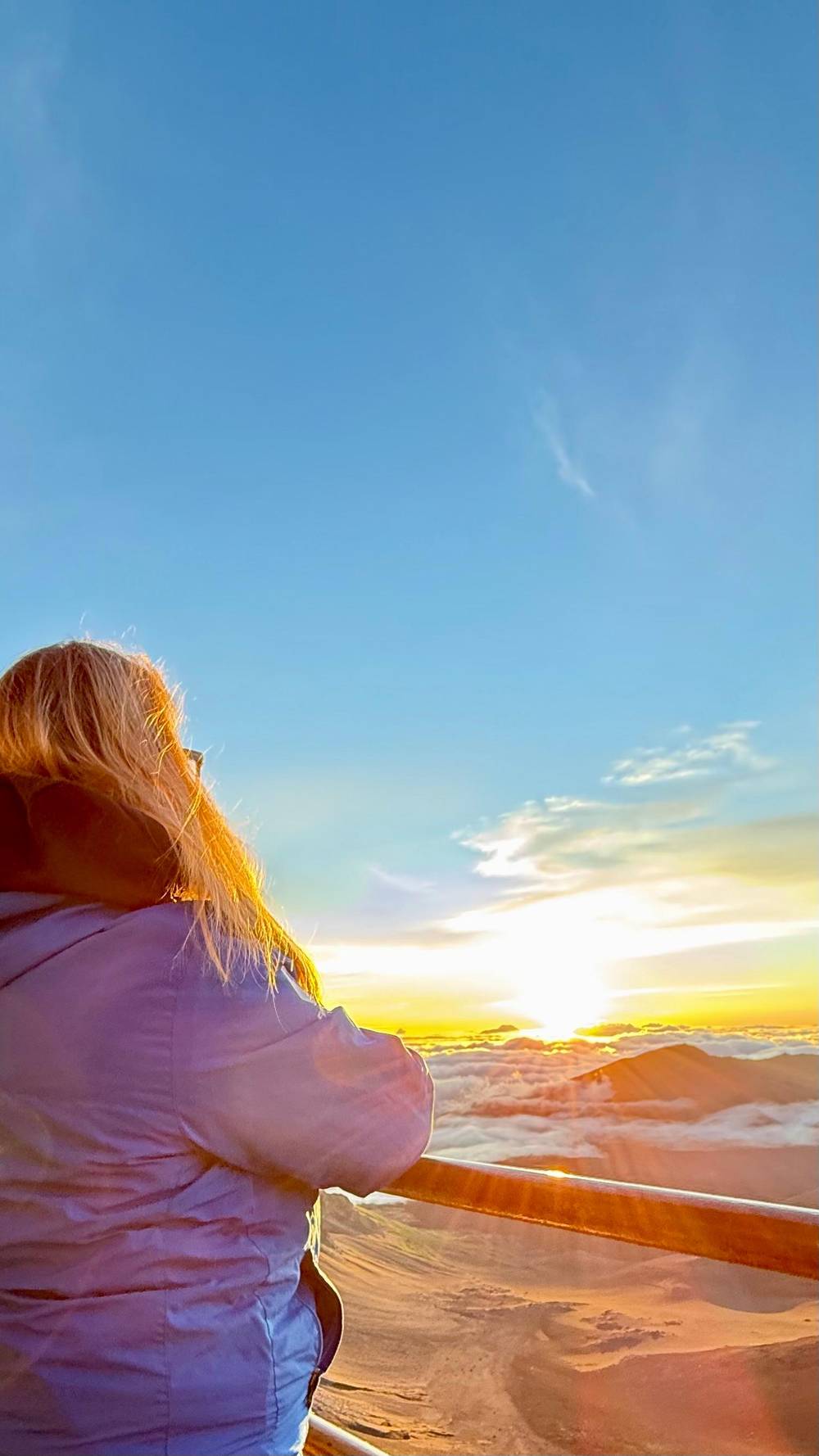
Through My Lens on YouTube · The video waits until you tap play to load.
When beginning your hike on a downward slope, allow for twice the time hiking to get out, e.g. 15 minutes hiking down + 30 minutes up = 45 minute hike.
The park's rules are short and enforced. Hikers must stay on marked trails because of the fragile nature of Hawaiian ecosystems, and groups larger than 12 must split into smaller groups separated on the trail.9 The Kaupo Trail is not within park boundaries and is not maintained by the park, and it does not belong in a morning plan.34 Respect for the mountain also applies: Haleakala is sacred to Native Hawaiians and cultural practitioners should be left undisturbed.35
Communication is the weak point. The park says there is no cell phone service in the crater, that service at trailheads is very limited, and that you should keep your group in sight of each other.25 It asks you to share your itinerary with someone you trust and gives an emergency line for the park's communication center, which is for emergencies only: 808-985-6170.36 The summit district page adds that emergency medical assistance is at least 1 hour away.37
A last rule is about wildlife and speed. The park says to drive the speed limit, to stop and wait for wildlife to cross and not to feed wildlife.38 The nene, a regular in car parks and beside roads according to the park, is the animal you are most likely to meet on the way to a trailhead.39 Put together, these rules are a short list of behaviours that keep a hike pleasant for you and safe for the mountain.
Start from your reservation. If you intend a sunrise at the rim followed by a walk, book your sunrise reservation first, since the park says reservations often sell out within fifteen minutes of release.24 Then pick a walk that fits the time after the sunrise: Pa Kaoao for a quick stretch, Leleiwi for a viewpoint, Hosmer Grove for birds, or the first overlook of Sliding Sands for a taste of the crater.3,4,14,15
Pack the cold-weather kit even if the forecast looks clear and friendly, since the park says weather can deviate considerably from the forecast.40 Carry water, since no food is for sale in the park and drinking water is available at visitor centers.41 Tell someone your plan, keep your group together and allow the extra time the return climb will take, and the way back is where tired legs and thin air meet.
If you want more than a walk, decide between the guided day and an overnight in the crater, and book either of them well ahead of your trip. The sunrise window ends at 7:00 AM, and a crater trail needs the rest of the morning, so a sunrise and a long hike on the same day is a stretch for most legs.1 Give each its own day if you can, and the mountain will reward both, with a rest day in between to let your legs and your sleep recover.
FAQ
The park does not recommend walking the 10 mile summit road in the dark and crowded early hours.2
The park says the crater floor is 3.9 miles down one way, with almost 2,500 ft of height change.5
The park advises twice the time to hike out as to hike in when a trail starts downhill.6
The park says there is no cell phone service in the crater and very limited service at trailheads.25
Tent camping at Holua and Paliku and the wilderness cabins are by reservation through Recreation.gov.21
It is a 7 hour walk with a picnic lunch and snacks packed in, running through the day.
Sources
Also worth reading
Planning a sunrise at the Haleakala summit? Ask a real person here.